



Bactrian camel
Bactrian camels, also known as wild camels. Bactrian camels are mammals of the camel family in the order Artiodactyla. The body shape is similar to that of a domesticated Bactrian camel, but the hump is smaller, the hooves are narrower, and the ears are also smaller; The back has twin peaks and the neck is long and curved. The lower neck hair, upper outer body hair, and tail hair of the limbs are all short; The fur is sandy yellow brown, with a slightly gray snout. Bactrian camels have a very sensitive sense of smell and are tolerant of hunger and thirst. They can go without drinking water for more than 10 days or even longer. When they are extremely dehydrated, they can break down the fat inside their humps, producing water and heat. Bactrian camels are also resistant to high and cold temperatures, wind and sand, and are good at long-distance running. They can run hundreds of kilometers in a short period of time.

Right Whale
Right whales are also known as humpback whales, black humpback whales, straight backed whales, Biscay whales, and beaked whales. It is a rare cold temperate baleen whale belonging to the family of right whales in the order of cetaceans. The body length is about 17 meters and the weight is 47-69 tons. The body color is blue black or black, the head length is about 1/4 of the body length, and it has a unique shaped keratin tumor, hence the name "beaked whale". Right whales are distributed in the South China Sea, East China Sea, Yellow Sea, Taiwan Sea, Pacific Ocean and other waters in China. They feed on planktonic crustaceans. Due to overfishing, the number of right whales is on the brink of extinction, estimated to be only 1000 in the North Pacific and around 1000 in the North Atlantic. They are now protected through international agreements

Heptranchias perlo
A species of shark belonging to the family Hexabranchidae and the genus Hexabranchia. The body is elongated, with a sub cylindrical shape in the front and slightly flattened in the back. Slightly flattened head; There are no depressions above or below the tail base. Large deep-sea sharks that inhabit the outer slopes of continental or island shelves, generally inhabiting depths of 100-400 meters, but can reach depths of up to 1000 meters. They are occasionally captured on the surface of water. Mainly feeds on other small sharks, small bony fish, crustaceans, and squid. Ovulation can give birth to 9-20 young sharks per litter. Widely distributed in tropical and temperate coastal waters of the Atlantic, Indian Ocean, and Pacific Ocean. Distributed in the East China Sea, the waters near Taiwan, and the South China Sea in China.

The sperm whale
Marine mammals of the order Cetiformes and family Sperm Whales. With a body length of up to 18 meters and a weight of over 50 tons, it is the largest toothed whale and the deepest and longest diving mammal. Like a fish in size, it breathes through its lungs. Sperm whales prefer to live in groups, often consisting of a small number of male whales and large groups of female and juvenile whales forming large groups of dozens or even two to three hundred. Sexually fierce. The marriage system of one male and multiple females. The geographical range of distribution is very wide. But it is usually found in the continental slope or deeper waters. The dried secretion of sperm whale intestines is called "ambergris", which is not only a precious spice but also a precious traditional Chinese medicine.
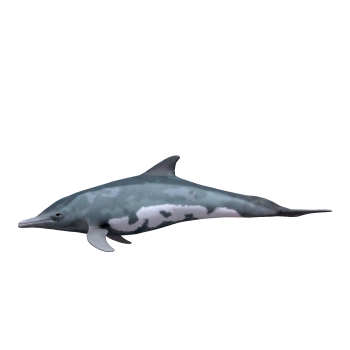
Stenella coeruleoalba
Striped dolphin, a species of dolphin in the family of dolphins, with a beak of equal length. Striped dolphins are capable of performing various aerial movements, such as jumping into water and colliding with water. There is a unique behavior of them, called 'tail turning', where they jump high and quickly rotate their tail leaves in front of water. This species was originally very abundant and is a common dolphin in the Pacific Ocean. In recent years, due to the deteriorating ecological environment, the population has sharply declined and urgently needs protection.

Carcharhinus melanopterus
The black winged true shark is an aquatic animal belonging to the true shark family of the true shark order. Its body is thick and over 4 meters long, with a gradually shrinking tail in the shape of a spindle, and a wide and flat head. The true shark with black wings is distributed in the East China Sea and South China Sea, as well as in Japan, Indonesia, the Red Sea, the Indian Ocean, and the Southwest Pacific. It inhabits tropical and subtropical seas. Black winged sharks usually live alone and occasionally hunt in groups. Food includes reef fish, crabs, mantis shrimp, and other crustaceans. The black winged shark is one of the few sharks that can completely jump out of the water. Sometimes it can be preyed upon by humans, as well as by large sharks or even large groupers.

humpback
The humpback whale is a mammal belonging to the family Serranidae in the order Cetacean, also known as the great winged whale, humpback whale, saw arm whale, or sperm holding whale. The lifespan is 60-70 years. Humpback whales are distributed in all oceans around the world, especially in the waters of Antarctica. Distributed in the Yellow Sea, East China Sea, and South China Sea in China. They feed on krill and migratory small fish. The group is not large, usually accompanied by pairs. Regularly migrate north and south every year. Due to its high utilization value, the humpback whale has become the third largest producer of baleen whales in the world, but its quantity is gradually decreasing. It has been listed in Appendix I of the Convention on International Trade in Endangered Species of Wild Fauna and Flora and recognized as a first-class protected wild animal at the national level.

tiger
It is a large feline in the mammalian class, with nine subspecies and significant differences in body size and morphology between each subspecies. The Siberian tiger is the largest, with a male body length of up to 3.7 meters and a weight of 423 kilograms. The Sumatran tiger is the smallest living subspecies, with a male tiger measuring 2.34 meters in length and weighing 136 kilograms. Tigers are typical mountain forest dwelling animals that can thrive in tropical rainforests and evergreen broad-leaved forests in the south, as well as deciduous broad-leaved forests and mixed coniferous and broad-leaved forests in the north. Due to human hunting and fragmentation of wild habitats, tigers have become rare and endangered species. A 2016 survey showed that there were 3890 wild tigers worldwide.

tiger
It is a large feline in the mammalian class, with nine subspecies and significant differences in body size and morphology between each subspecies. The Siberian tiger is the largest, with a male body length of up to 3.7 meters and a weight of 423 kilograms. The Sumatran tiger is the smallest living subspecies, with a male tiger measuring 2.34 meters in length and weighing 136 kilograms. Tigers are typical mountain forest dwelling animals that can thrive in tropical rainforests and evergreen broad-leaved forests in the south, as well as deciduous broad-leaved forests and mixed coniferous and broad-leaved forests in the north. Due to human hunting and fragmentation of wild habitats, tigers have become rare and endangered species. A 2016 survey showed that there were 3890 wild tigers worldwide.

Flying Fish
Flying fish is a general term for the family Flying Fish in the order Perciformes of the class Actinopterygii; Including 8 genera and approximately 50 species; Also known as Wen Ray Fish, Yan Ray Fish, or Yan Er Fish. These fish are famous for their ability to 'fly', hence they are called flying fish. Flying fish are distributed in temperate and tropical oceans and are warm water upper layer fish. It feeds on crustaceans, planktonic animals, fish eggs, and small fish. They like to migrate in groups and often leap out of the water to "fly". They can glide out of the water several times in a row, flying and falling at different times, using this method to avoid enemies in the water and air. Flying fish is not only one of the fastest fish species in the world's upstream, but also a small and medium-sized economic fish, mainly caught by countries such as the Philippines and Indonesia.

Shark Whale
It is a shark belonging to the family Characidae and genus Characidae. Nicknames: Tofu Shark, Big silly Shark. Whale sharks belong to only one family, one genus, and one species. With a massive body and a total length of up to 20 meters, it is the largest fish in the world. Belonging to oceanic fish species. Eating a large amount of plankton and small fish. It is mainly distributed in tropical and temperate sea areas, and is found in summer and autumn seasons in various sea areas of China. Mild temperament. Due to extensive hunting and killing, the quantity has sharply decreased.

squirrel
Squirrels are mammals belonging to the family Squirrels in the order Rodentia. Because squirrels look like mice and most of them like to gnaw on nuts such as pine cones, they are accustomed to living on trees, especially pine trees, hence the name. Squirrels are widely distributed in Asia, North and South America, and Europe. Squirrels are omnivorous animals that eat a variety of plants, including nuts, seeds, pine cones, fruits, fungi, and green plants, as well as insects. Squirrels have medicinal value, with a sweet and salty taste, a neutral nature, and the effects of regulating qi, regulating meridians, reducing accumulation, and relieving pain. Squirrel meat is edible and has a fragrant scent of pine nuts. Squirrels are valued for their fur and are important resource animals in the hunting industry.
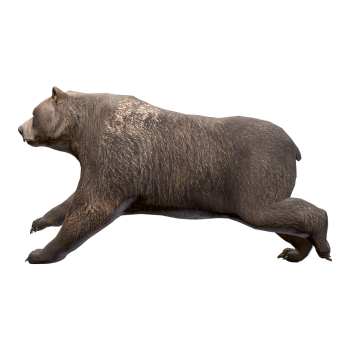
Brown bear
The brown bear is a mammal belonging to the genus Ursa in the family Ursidae. He has a strong physique, with raised shoulders and a short tail behind him. The fur color is mostly brown or brownish yellow; Elderly individuals appear silver gray in color; Childhood is brownish black. The lifespan under wild conditions is 20-30 years. Brown bears are widely distributed, mainly in Eurasia and North America. In China, they are mainly found in Xinjiang, the Qinghai Tibet Plateau, and the mountainous areas of Northeast China. Strong adaptability, able to survive tenaciously from the edge of deserts to high mountain forests, and even ice fields. Omnivorous type. The only mammal that can go without eating, drinking, urinating, or defecating for six months or even longer is a second-class protected wild animal in China.
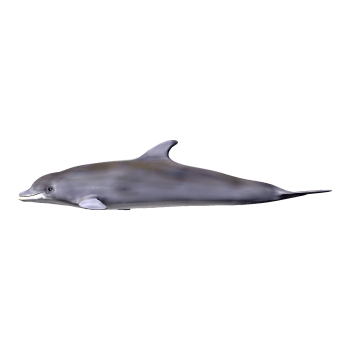
Bottlenose Dolphin
The bottlenose dolphin is a mammal belonging to the genus bottlenose dolphin in the family Cetiformes, also known as the bottlenose dolphin. Bottlenose dolphins are mainly distributed in the Atlantic, Pacific, and Indian Oceans, as well as the Mediterranean and Black Seas. It is found in the Bohai Sea, Yellow Sea, East China Sea, South China Sea and other sea areas in China. It inhabits the coastal and nearshore areas of tropical and temperate seas. Feed on group dwelling fish. Bottlenose dolphins are one of the smartest animals, with a brain capacity even larger than humans. Has been listed in Appendix II of the Convention on International Trade in Endangered Species of Wild Fauna and Flora (CITES); Listed as a near threatened species in the Red List of Species in China; It is currently a second-class protected animal in China.

Popular Models
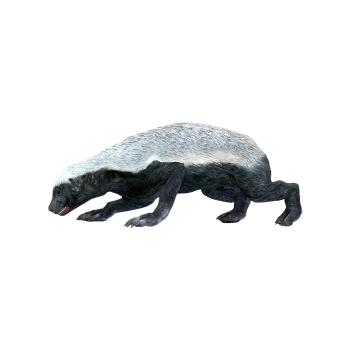
Honey Badger (3D animated model)
194 View
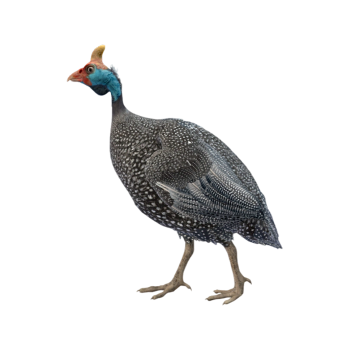
Guinea fowl (3D animated model)
165 View
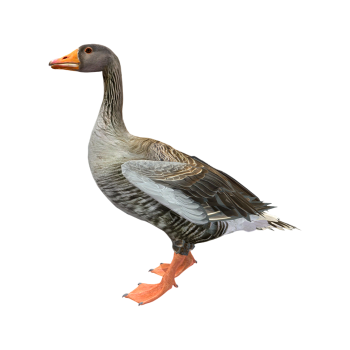
Wild Goose (3D animated model)
187 View
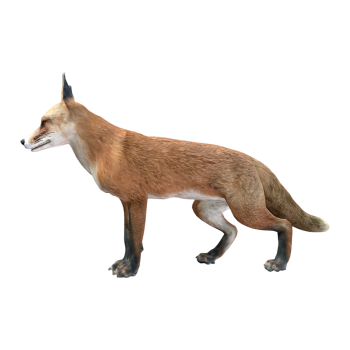
Red Fox (3D animated model)
155 View
Random Model


AJ(Air Jordan)Delta SP Black sneaker
709 View

Japan Fujifilm X-T2 Camera
754 View

Metabo vintage electric drill
802 View

camp bed
419 View

Industrial metal shelf
406 View

moth
753 View
Egg with tray
884 View

Antique Mauser Bolt Rifle
867 View

Copper Candlesticks and Candles
1256 View